
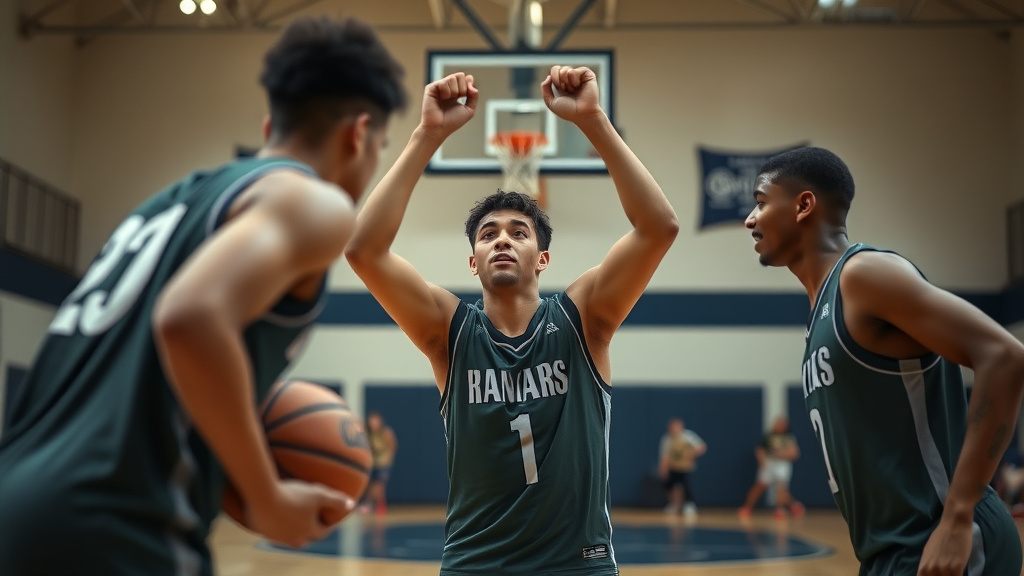
Defense secures championships—a enduring basketball principle that young players are finally taking seriously. While scoring abilities often steal the spotlight, perfecting defensive fundamentals is the hidden weapon that elevates ordinary athletes into impact players. This article examines essential defensive strategies, from footwork fundamentals to positioning principles, that coaches are teaching the upcoming wave of basketball stars. Learn how these proven techniques enhance athletes’ performance level and unlock their true winning potential on the court.
Perfecting the Core Principles of Defensive Positioning
Defensive placement forms the cornerstone of strong basketball defense, demanding young players to understand spacing awareness and court movement patterns. Correct positioning enables defenders to read opponent actions, deny passing lanes, and challenge shots without fouling. When players perfect these fundamental principles early in their development, they establish a defensive foundation that translates throughout their basketball journeys. Coaches emphasize that positioning transcends physical attributes alone; it’s about game sense, anticipation, and steady application that transforms defensive potential into real winning plays.
The relationship between positioning and team defense cannot be overemphasized in modern basketball. Young players who recognize where to stand relative to their opponents, teammates, and the basket build defensive structures that opponents struggle to penetrate. Sound positioning decreases defensive breakdowns, limits help-defense rotations, and enables players to play confidently without second-guessing their responsibilities. When entire teams apply proper positioning principles with consistency, they develop defensive systems that confound opponents and generate turnovers, ultimately offering the edge necessary for championship-level performance.
Stance and Footwork Essentials
Establishing the proper defensive stance is the foundational element toward developing into an top-tier defender at any level of competition. Young players must learn to position their feet shoulder-width apart, holding their knees in a bent position and their body close to the ground. This defensive posture provides the stability necessary for fast lateral shifts and explosive opening steps that separate elite defenders from typical players. A proper stance also enhances balance throughout defensive transitions and helps players keep their position when opponents try to create space through physical contact or deceptive actions.
Footwork proficiency sets apart championship-caliber defenders from those who face challenges with maintaining defensive standards. Young players must cultivate rapid, precise steps that help them remain directly in front of their opponents while upholding appropriate spacing and alignment. Slide steps, crossover steps, and backward steps each fulfill distinct defensive roles that coaches reinforce regularly during practice. When paired with sound stance principles, superior footwork permits defenders to respond swiftly to attacking actions, challenge shots successfully, and bounce back from defensive mistakes that might otherwise lead to easy scoring opportunities.
- Keep feet spaced at shoulder width for optimal balance and stability
- Bend knees deeply to reduce center of gravity effectively
- Use rapid sliding movements to preserve defensive position
- Practice explosive first-step movements for lateral quickness
- Maintain engaged hand movement while remaining low during defense
Exploring Defensive Strategies and Strategic Plans
Defensive strategy establishes the foundation of competitive play in basketball, demanding young players to build a comprehensive understanding of team positioning and tactical execution. Coaches emphasize that solid defense surpasses individual effort, demanding synchronized movement, communication, and anticipation. Players must understand opponents’ positioning, anticipate plays, and position themselves effectively to interrupt offensive rhythm. This organized system transforms defense from reactive to proactive, enabling teams to dictate pace of play and generate offensive chances through turnovers created and defensive rebounds.
Game plans act as foundations for defensive excellence, customizing approaches to take advantage of opponent vulnerabilities and counteract their strengths. Young players gain from analyzing multiple defensive approaches, understanding when to apply pressure and when to maintain spacing. Coaches conduct film study sessions where athletes review opposing teams’ patterns, habits and key players. This groundwork develops confidence and decision-making skills, enabling players to execute defensive assignments naturally in high-pressure situations. Careful planning turns individual skills into integrated team defense.
Man-to-Man Defense Techniques
Man-to-man defense constitutes the core defensive concept where each player takes on the duty of guarding a designated adversary. This method develops individual accountability while requiring ongoing dialogue and adjustment. Young players learn to sustain correct defensive positioning, using active hands and lateral footwork to stay in front of their opponent and the goal. The technique emphasizes body positioning, pressure application, and recovery movement. Perfecting man-to-man defense strengthens confidence and establishes the basis for understanding more complex defensive schemes.
Solid man-to-man defense requires sustained intensity and athletic fitness. Players must keep their center of gravity down, shift side to side without tangling their feet, and prevent reaching violations while sustaining their defensive effort. Coaches teach young athletes to use their body as a barrier, eliminating open passing options and creating challenging shot attempts. Defensive rotations and rotational help become crucial when offensive players attempt to exploit mismatches. Through consistent practice work and game situations, young players create the natural reflexes required to perform man-to-man concepts successfully.
- Maintain defensive stance with knees bent throughout possession
- Keep hands active to disrupt passing lanes and contest shots effectively
- Use side-to-side movement to stay in front of dribbling opponents always
- Communicate constantly with teammates about pick coverage and rotations
- Recover quickly after lapses in coverage to stop uncontested scoring
Developing Mental Toughness and Situational Awareness
Mental toughness separates elite defenders from average players, compelling young athletes to cultivate unwavering focus and resilience during high-pressure moments. Coaches emphasize mental imagery, positive self-talk, and breathing control techniques to help players stay calm when facing aggressive opponents. Establishing this mental base enables young defenders to perform skills reliably, bounce back from errors, and maintain top-level play throughout entire games, regardless of circumstances.
Court intelligence develops reactive defenders into forward-thinking defenders who read plays before they develop. Young players learn to study opposing team patterns, identify scoring sequences, and gain positional advantage by watching game film and examining statistical data. This deep grasp of how the game works enables players to make intelligent decisions, talk with teammates, and force mistakes that shift momentum decisively in their favor of their team during important times.
Reading Opponent Movements
Reading opponent movements is a critical skill that allows young defenders to predict what’s coming and react defensively with accuracy and proper timing. By analyzing body language, footwork patterns, and eye movement, players develop the ability to predict whether opponents will attack the basket, take a shot, or distribute the ball. This anticipatory awareness allows defenders to position themselves optimally, contest shots effectively, and disrupt offensive plays before they fully develop, creating turnovers and defensive advantages.
Building this skill requires regular training examining in-game scenarios and game film of various opponents. Young players learn to recognize fine details like shoulder movement, ball handling patterns, and center of gravity that reveal scoring objectives. Coaches guide players through training exercises that stresses observation and quick decision-making, creating neural pathways that allow split-second actions during match play when split-second timing decides defensive success.
- Watch shoulder rotation to predict shot or pass attempts right away
- Monitor foot positioning to predict driving direction and movement on offense
- Analyze ball handling patterns to identify hesitation or crossover moves
- Track eye direction to determine where opponents intend to strike
- Study weight distribution to recognize preparation for jump shots signals
Practice Sessions That Build Top-Tier Defenders
Building elite defenders requires dedicated training that focuses on specific skill areas. Championship-level defensive programs incorporate advancing exercises that test young players to execute techniques under game-like pressure. These organized drills build muscle memory, quickness of response, and court understanding simultaneously. Coaches design drills to emphasize foundational defensive techniques while progressively raising complexity and intensity. By practicing established techniques, young athletes absorb defensive concepts that feel instinctive during official competition.
The most impactful defensive training programs integrate individual skill development with team-oriented scenarios. Young players benefit from drills that highlight communication, positioning awareness, and weak-side defensive principles. Progressive difficulty levels ensure players remain challenged while strengthening confidence in their abilities. Coaches assess key performance indicators to pinpoint areas for growth and modify instruction accordingly. This data-driven approach to defensive development ensures young athletes reach their peak performance and make meaningful contributions in team success.
Applied Exercises for Professional Growth
Practical defensive exercises turn theoretical knowledge into practical abilities young players can perform during games. Effective drills simulate real-game situations while allowing coaches to offer immediate feedback and corrections. These exercises develop footwork coordination, lateral movement speed, and defensive placement simultaneously. Players practice maintaining defensive stance while moving in multiple directions, building the conditioning necessary for ongoing defensive quality. Repeating fundamental drills creates instinctive reactions that players implement without conscious thought during competition.
Including game-speed drills into training sessions equips young defenders for actual match intensity and pace. Coaches implement competitive drills that inspire players while developing defensive abilities systematically. Reduced-format games and one-on-one situations create key opportunities for players to apply developed techniques against live opposition. These game-realistic exercises strengthen decision-making skills and confidence in defense at the same time. Youth defenders who train at game speed demonstrate significantly improved defensive play when participating in official competitions.
- One-on-one isolation drills developing individual defensive fundamentals and foot positioning
- Lateral shuffle exercises developing quickness and defensive stance consistency
- Help-side rotation drills focusing on team defense and communication skills
- Close-out drills simulating game-speed approaches to perimeter shooters
- Transition defense drills readying players for fast-break opportunities
